
Peculiar Supremacy and Its Consequences
Miss Peregrine's Home of Peculiar ChildrenGolan’s rhetoric reveals the ideology behind the enemy’s experiment and contrasts domination with the children’s interdependent community.
increasing Bearing strength in each event
 decreasing
Bearing strength in each eventdecreasingA Renegade Vision
A Renegade Vision
Mastery over mortality
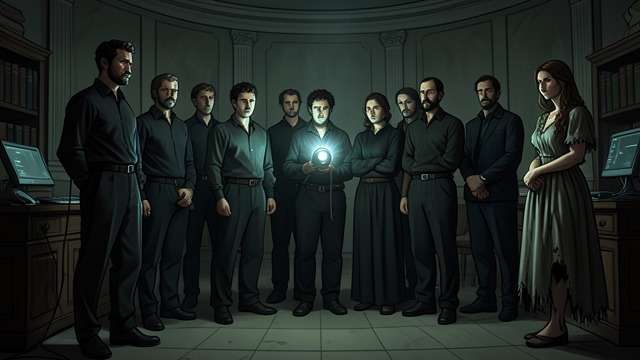
The renegade faction seeks freedom from aging and loop restrictions. Its members treat exceptional ability as grounds to surpass natural limits.
Warning refused
Miss Peregrine and the Council oppose the experiment, but the faction proceeds. Its pursuit of power is framed as progress even as it disregards consequences for others.
Golan’s Supremacist Argument

Golan’s Supremacist Argument
Contempt for common people
Golan argues that peculiars should rule rather than hide and calls ordinary humanity inferior. His language converts difference into a claim of entitlement.
Power without fellowship
His willingness to threaten children and Ymbrynes exposes the violence beneath the ideology. Peculiar ability becomes an excuse for domination rather than responsibility.
A Different Community
A Different Community
Shared abilities
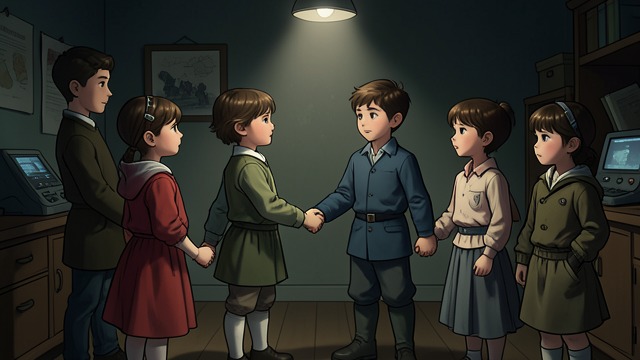
The children use their diverse talents to escape, protect each other, and recover Miss Peregrine. No single gift makes one child ruler over the others.
Belonging over domination
Their collective journey contrasts with Golan’s hierarchy and the experiment’s ambition. The story presents mutual reliance, rather than supremacy, as a meaningful response to difference.
Before the 1908 experiment
During the lighthouse confrontation
During the children’s final departure
